

The speciality
Straighter teeth, at any age
Straightening teeth, correcting a bite, and guiding the jaws in a child who is still growing. It is the part of dentistry Prof. Dr S. Srinivas teaches, and the centre of this practice rather than one item on a list.
What is on this page
- Fixed braces, metal and ceramic
- Clear aligner trays
- Guiding jaw growth
- Where jaw surgery fits
At a glance
-
Fixed braces
Metal and ceramic. The workhorse, and the most predictable.
-
Clear aligners
Removable trays instead of brackets. Most people will not notice them.
-
Guiding jaw growth
For a child still growing, so the adult teeth have room to arrive.
-
Jaw surgery
Where the jaws themselves, not only the teeth, have to move.
Fixed braces, metal and ceramic
Braces align and straighten teeth, set their position against the opposing bite, and improve dental health along the way. They are bonded to the teeth and stay there for the length of the treatment, which is why they can move teeth that a removable appliance cannot.
We fit two kinds: metal and ceramic.
Which one suits a case is a clinical decision rather than a preference, and it is made after the teeth, the bite and, where it matters, a radiograph have been looked at.
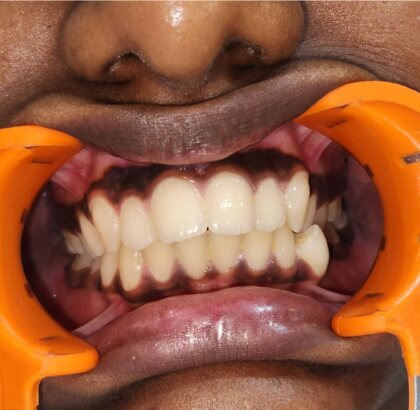 Before
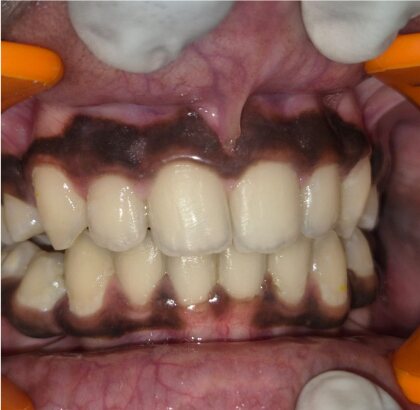 After
After
Clear aligner trays
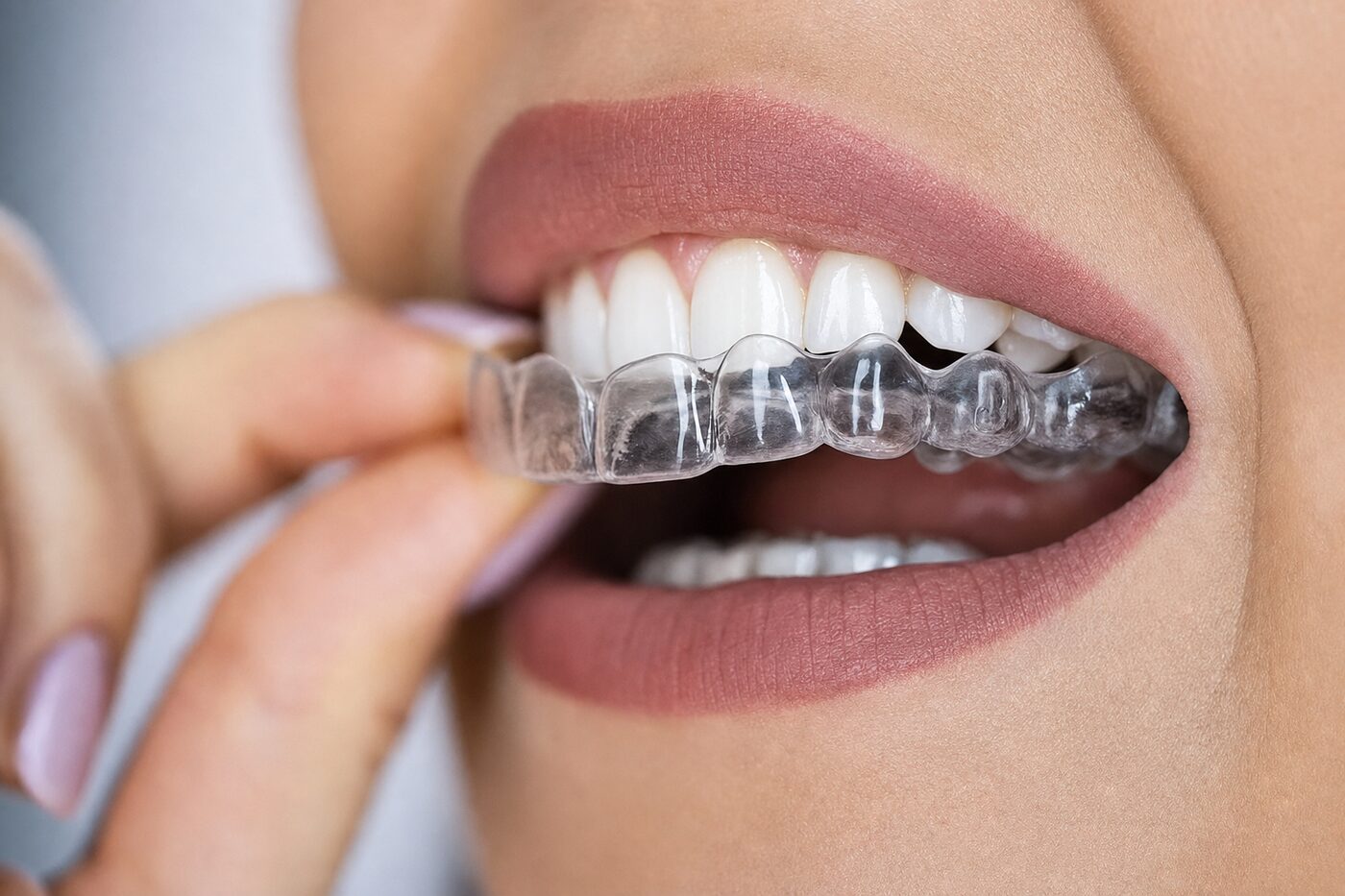
An aligner treatment is a custom-made series of trays, made for one mouth and no other. The trays are smooth plastic and are worn over the teeth. Each one moves the teeth a small amount along a sequence the orthodontist plans in advance, and a new set goes in about every two weeks until the treatment is finished. There are no brackets to bond and no wires to tighten.
Aligners suit some cases and not others, and the honest answer to whether they will work for a particular bite comes after the bite has been examined, not before.
Guiding jaw growth
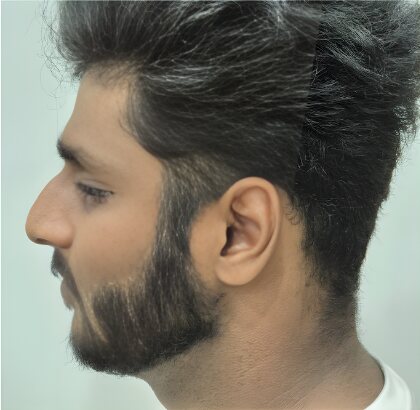
In a child who is still growing, the upper and lower jaws can be guided as well as the teeth. Headgear is the appliance that does it. It attaches to the braces by metal hooks or by a facebow, and it is anchored by a strap or a cap at the back of the head or the neck, sometimes both.
It is used most often where the upper and lower jaws sit too far apart from front to back. Treating that while the bones are still growing is a different proposition from treating it once growth has finished, which is the reason a child’s first orthodontic assessment is worth having early.
This is dentofacial orthopaedics. Prof. Dr S. Srinivas is a dentofacial orthopaedist as well as an orthodontist.
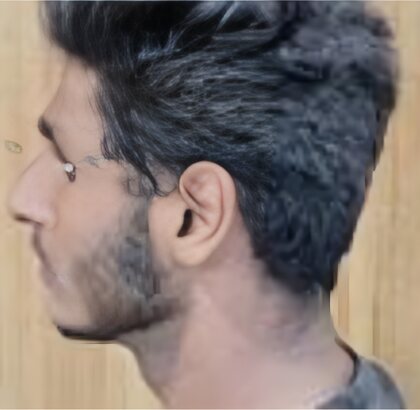 Before
 After
After
Where jaw surgery fits
Once growth has finished, some bites cannot be corrected by moving teeth alone, because what is out of position is the jaw and not the dentition. Orthognathic surgery repositions the jaw, with orthodontic treatment before it to prepare the teeth and after it to settle the bite.
It is a bigger undertaking than braces and it is not the first answer to anything. Where it is the right answer, we treat it on the same surgical footing as impactions and extractions.
Oral surgery, impactions and extractions →Every orthodontic case we have published, grouped by treatment and captioned, is on one page rather than scattered across several. See all the before-and-after cases →
An orthodontic assessment
Monday to Saturday, 10:00 to 13:30 and 16:00 to 20:30.